

The first crisp October air arrives in Jefferson City, and you finally switch your thermostat from 'cool' to 'heat.' A familiar, slightly musty or burning smell fills the air for a moment, and you might see tiny particles dancing in the sunbeams slanting through your windows. While this is common, it's also a clear signal that heater season dust has been awakened. After a long summer of inactivity, your HVAC system is now circulating months of settled dust, pet dander, and allergens throughout your home. This is the perfect time to assess your indoor air quality and tackle buildup before you seal up your home for the winter.
As a specialist who has overseen countless home cleanings, I've seen firsthand how the transition from fall to winter impacts a home's environment. Understanding what to look for can help you maintain a healthier, more comfortable living space all season long.
Common Signs and Symptoms
Recognizing the problem is the first step. The signs of excessive dust can range from obvious to subtle, but they become much more apparent once the furnace kicks on. Here are some key Jefferson City dust buildup signs to watch for:
- Visible Dust on Surfaces Shortly After Cleaning: Do you wipe down your coffee table, bookshelves, and TV stand, only to find a fresh layer of dust a day or two later? This is a classic sign that your HVAC system is circulating more dust than your home can handle.
- Increased Allergy or Respiratory Issues: If you or your family members are experiencing more sneezing, coughing, itchy eyes, or general stuffiness indoors, it could be linked to airborne particulates. The start of heater season often coincides with a spike in these symptoms.
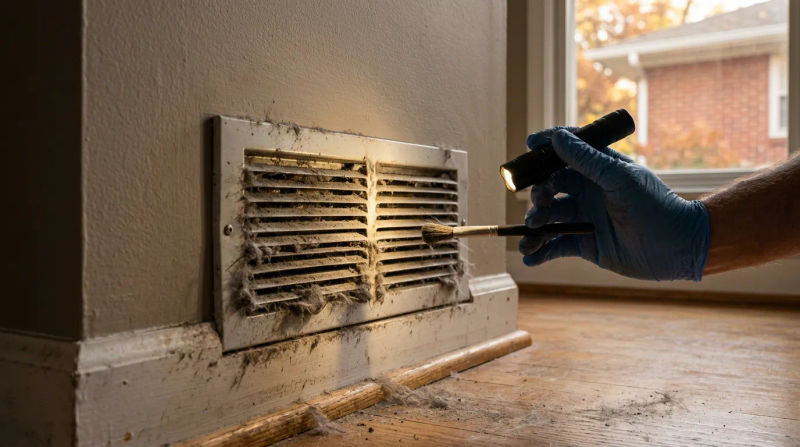
- Dark Smudges Around Air Vents: Take a close look at your supply and return air vents. How to tell if vents need cleaning often starts here. You may see gray or black streaks on the ceiling, walls, or carpet surrounding the vent covers. This residue is created as the system's air pushes and pulls dusty particles against the surfaces.
- Dusty or Grimy Vent Covers: The grilles on your vents are a primary filter. If they are caked with a thick, fuzzy layer of dust, it’s a strong indicator that the air moving through them is heavily contaminated. This also restricts airflow, reducing your system's efficiency.
- Noticeable Dust in the Air: When sunlight streams into a room, can you see an unusual amount of dust motes floating in the air? While some are always present, a significant increase points to a circulation issue.
What Causes This Problem
Understanding the root causes of seasonal dust can help you address it more effectively. It's not just about a lack of cleaning; it’s about how your home functions as the seasons change.
The primary culprit is the dust, pollen, pet dander, and microscopic debris that has settled over the spring and summer. It accumulates in your ductwork, on furniture, in carpets, and in other out-of-the-way places. When your furnace blower turns on for the first time, it creates a powerful airflow that dislodges these settled particles and pushes them into your living spaces. In Jefferson City, the heavy autumn leaf fall can also contribute to a higher pollen and mold spore count, which gets tracked indoors and added to the mix.
As we close our windows to keep the cold out, we also trap these contaminants inside. Without the natural ventilation of open windows, the concentration of airborne dust and allergens rises significantly. This creates a closed loop where the HVAC system continuously recirculates the same dusty air.
Furthermore, many homes in the Jefferson City area, particularly the classic 1950s Ranch-style houses, may have older ductwork. Over decades, these systems can accumulate significant internal buildup that standard filters can't completely stop. The practical, single-story design of these homes is wonderful for living, but their sprawling duct systems can harbor some of the most stubborn indoor dust hotspots in fall.
Common hotspots we consistently find during our service visits include:
- Return Air Vents: These vents pull air into the system and are magnets for dust and pet hair.
- Baseboard Heaters: The fins on electric or hydronic baseboard heaters collect dust, which then burns off when the heat comes on, creating that distinct smell.
- Ceiling Fan Blades: Fans that have been idle all summer often have a thick layer of dust on the top of the blades, which gets launched into the room when turned on.
- High Shelves and Ledges: Areas above kitchen cabinets, on top of tall furniture, and on window ledges are classic dust collectors.
When to Call a Professional
Many homeowners can manage routine dusting with microfiber cloths and a good vacuum cleaner. However, there are situations where a DIY approach isn't enough to solve the underlying problem. Knowing when to call for help can save you time and significantly improve your home's air quality.
Consider contacting a professional cleaning service if you experience any of the following:
- Dust Returns Immediately: If you perform a thorough cleaning and a noticeable layer of dust reappears within 24-48 hours, the source is likely beyond surface level. It's probably circulating through your HVAC system.
- Persistent Allergy Symptoms: When indoor allergy symptoms don't improve despite regular cleaning and changing your HVAC filter, it indicates a higher level of allergens that needs to be professionally removed.
- Visible Buildup Inside Vents: If you remove a vent cover and see thick, matted dust and debris deep inside the duct opening, a standard vacuum cleaner won't be able to reach it. Our technicians use specialized equipment to safely and effectively clean these areas without damaging the ductwork.
- You Lack the Right Tools or Time: Tackling high-up areas like ceiling fans, tall shelves, and vaulted ceilings can be difficult and unsafe without the proper ladders and extension tools. Experienced professionals have organized workflows and the right equipment to handle these indoor dust hotspots in fall efficiently and safely.
A qualified team follows standardized processes to ensure a comprehensive cleaning. This includes using HEPA-filter vacuums that trap microscopic particles instead of releasing them back into the air and employing systematic, top-to-bottom cleaning methods to ensure dust is removed, not just relocated.
Conclusion
The arrival of heater season dust is a predictable part of autumn in Jefferson City, but it doesn't have to dominate your indoor environment. By recognizing the common signs - from dusty surfaces and grimy vents to increased allergy symptoms - you can take proactive steps. Pay attention to how your home feels and looks after you turn on the heat for the first time.
Addressing dust buildup early in the season, before you're fully closed in for winter, is key to maintaining better indoor air quality. A thorough, deep cleaning now can make a significant difference in your family's comfort and health throughout the colder months.
If you notice any of these signs and feel the problem is more than you can manage, contact a local cleaning service for an inspection. They can help you diagnose the extent of the issue and restore a clean, healthy environment to your home.